✓ With stable + lightweight preforms made from fiber strands
✓ exactly where you need the structural capacity
✓ with a fiber orientation that supports the force distribution of your product or component.
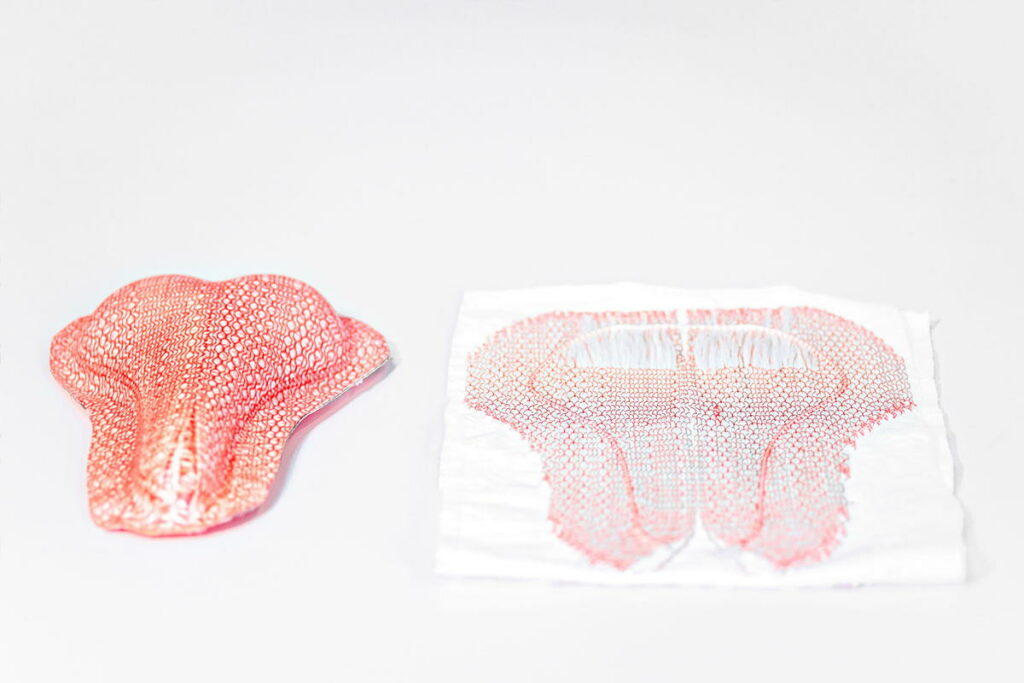
Reinforcing structures are the core of our fiber preforms. They absorb and distribute loads, thus determining the mechanical properties of the finished composite material. These structures significantly influence the strength, stiffness, and durability of your final product.
We supply you with complex and high-performance reinforcement structures of superior quality. Our process integrates design, precision manufacturing, and quality assurance.
Using advanced CAD software, we plan the shape of the components and the specific arrangement of the reinforcing fibers together with you – exactly where you need the structural performance.
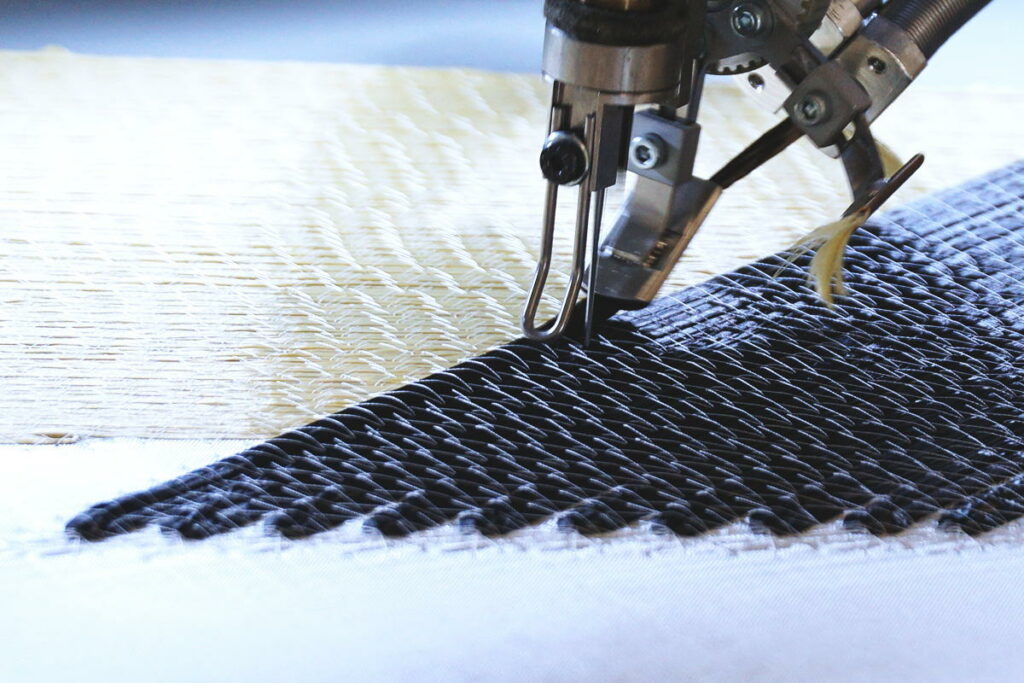
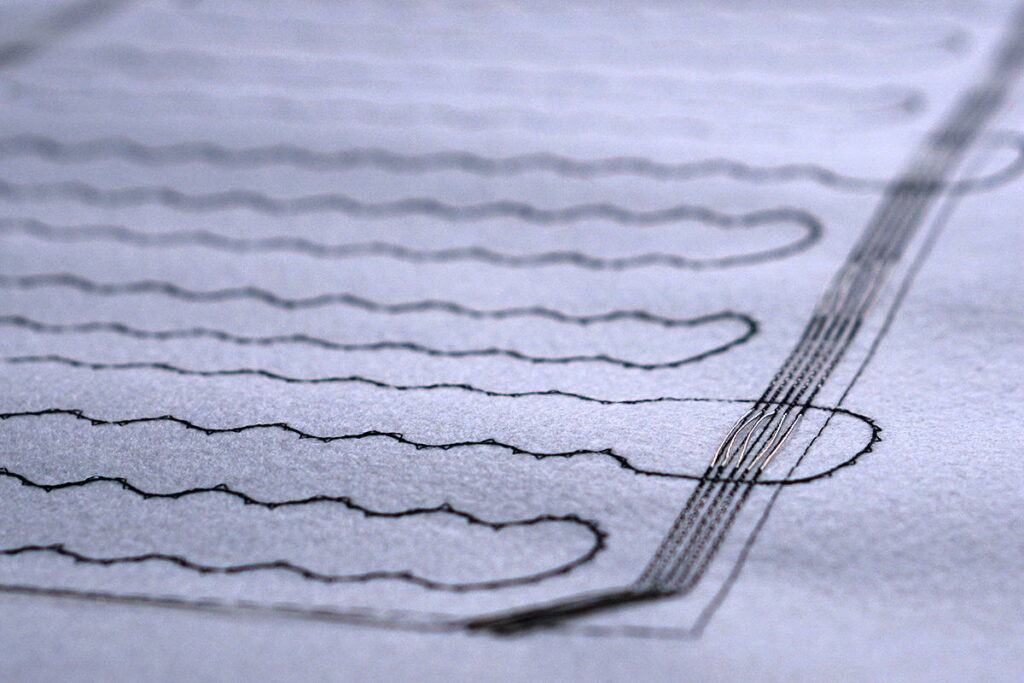
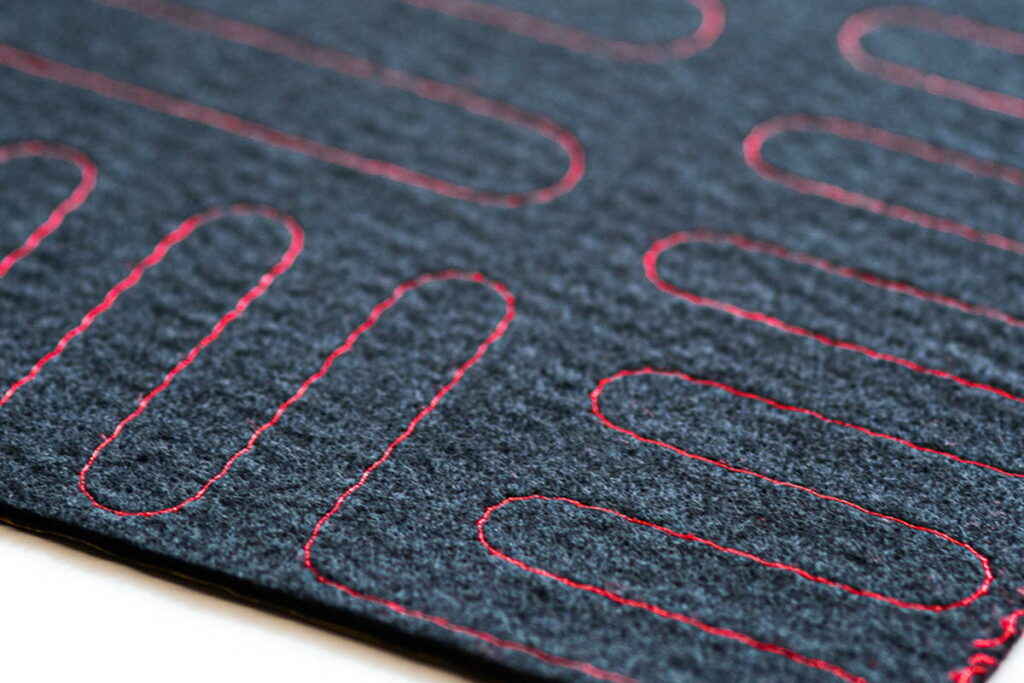
We use our CNC embroidery machines to produce the complex patterns and structures of the reinforcing fibers for you.
Near-net-shape manufacturing results in a maximum of 3% fiber rejects or waste.
Reinforcement structures are created by precisely stitching high-performance fibers such as carbon, fiberglass, and aramid onto a substrate or fabric. Whether classic nonwovens, special films, or stretchable textiles, we apply the fibers to any desired flexible substrate . From the outset, we ensure that the substrate is ideally suited to your requirements, your product, and its intended application, while maintaining cost-effective production.
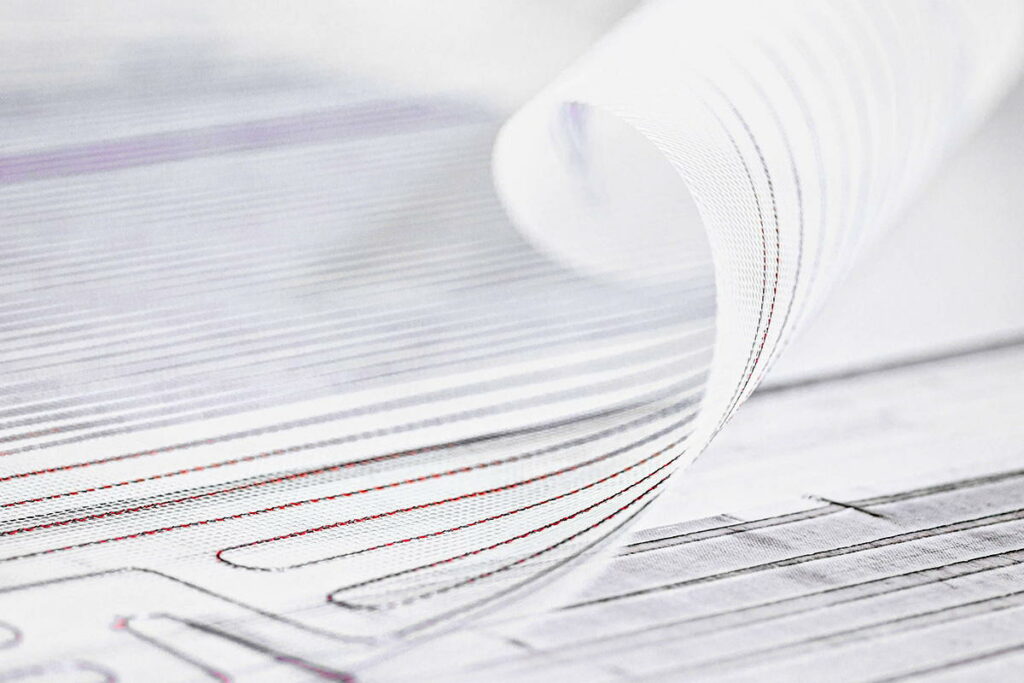
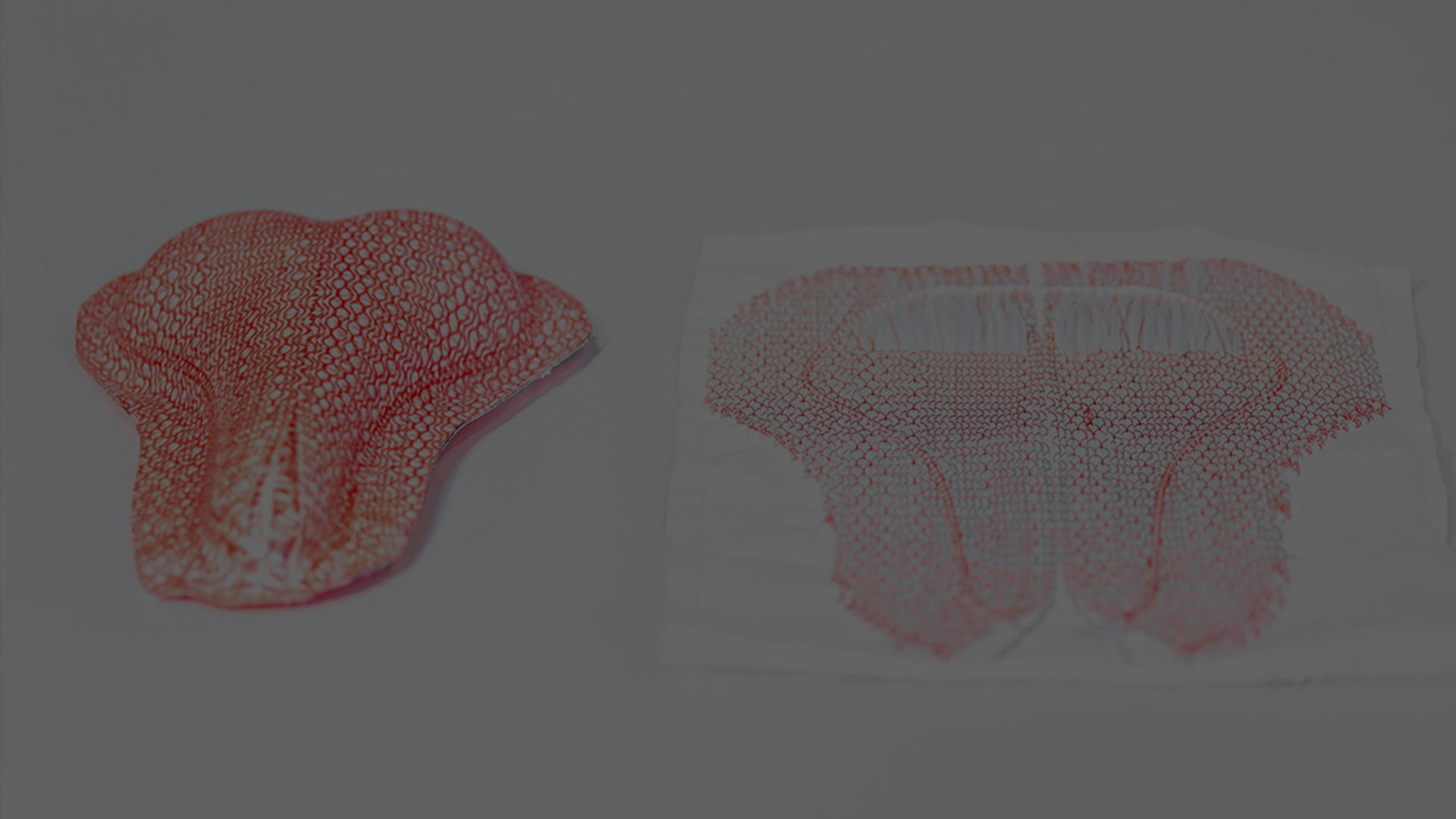
Do you need pure reinforcement structures without a carrier material ? Opt for removable nonwovens or films that can be removed without residue by water, heat or tearing.
Describe your component and the load situation to us. Together with you, we will design the appropriate reinforcement structure.
Get in touch with us! We look forward to your idea or challenge!
Here you will find answers to frequently asked questions about reinforcement structures made from fiber preforms by TFP Technology. The FAQs will help you quickly assess how load-path-optimized fiber orientation, the choice of substrate material, and the fiber type are suitable for your component and your strength and weight requirements. If you already have CAD data or a sketch of your component, we can also check the feasibility together.
A reinforcing structure is the fiber-stitched arrangement within a fiber preform that absorbs and distributes the forces occurring in the finished composite material. It therefore significantly determines the strength, stiffness, and durability of the finished component. Without a specifically designed reinforcing structure, a fiber composite component would remain structurally under-dimensioned despite the use of high-quality fibers.
TFP Technology works with you using CAD to plan the direction and density of the fibers within the reinforcement structure to accommodate the calculated force distributions in the component. Areas with higher loads receive additional fiber layers or a higher fiber density, while less stressed zones require less material. This allows weight to be saved precisely where it does not compromise the component's strength.
For reinforcement structures, TFP Technology processes classic nonwovens, special films, and stretchable textiles as carrier materials for the embroidered fibers. The choice of material depends on the planned further processing and the requirements of the specific component. Unusual or delicate carrier materials can also be integrated into the embroidery process upon request.
Yes, for purely reinforcing structures without a permanent carrier material, TFP Technology uses removable nonwovens or films that can be completely removed after the embroidery process using water, heat, or tearing. Only the fiber framework itself remains, without any additional carrier material in the finished component. This is particularly suitable when a permanent carrier material would impair the subsequent material properties of the composite.
Near-net-shape manufacturing using Tailored Fiber Placement (TFP) results in a maximum fiber waste of 3 percent for reinforcement structures. The fibers are stitched directly in the required shape and quantity, instead of being cut from a larger area. This significantly reduces both material costs and waste compared to traditional cutting methods.
For reinforcement structures, high-performance fibers such as carbon, glass fiber, and aramid are primarily used, and these can be combined depending on the requirements. Different fiber types within a single structure make it possible to specifically adjust properties such as flexibility, heat resistance, or impact strength. Which combination is suitable depends on the intended application and subsequent processing.
The process begins with the joint development of a layout that specifically aligns the fiber orientation with the component's load paths, as well as the selection of fiber and substrate material. TFP Technology then creates the CAD data and manufactures a prototype, which the customer tests in their own processing facilities. After optimization and approval, series production of the semi-finished products begins in small or large batches.

Using an advanced TFP process, we produce fiber preforms specifically for processing with thermoplastics.
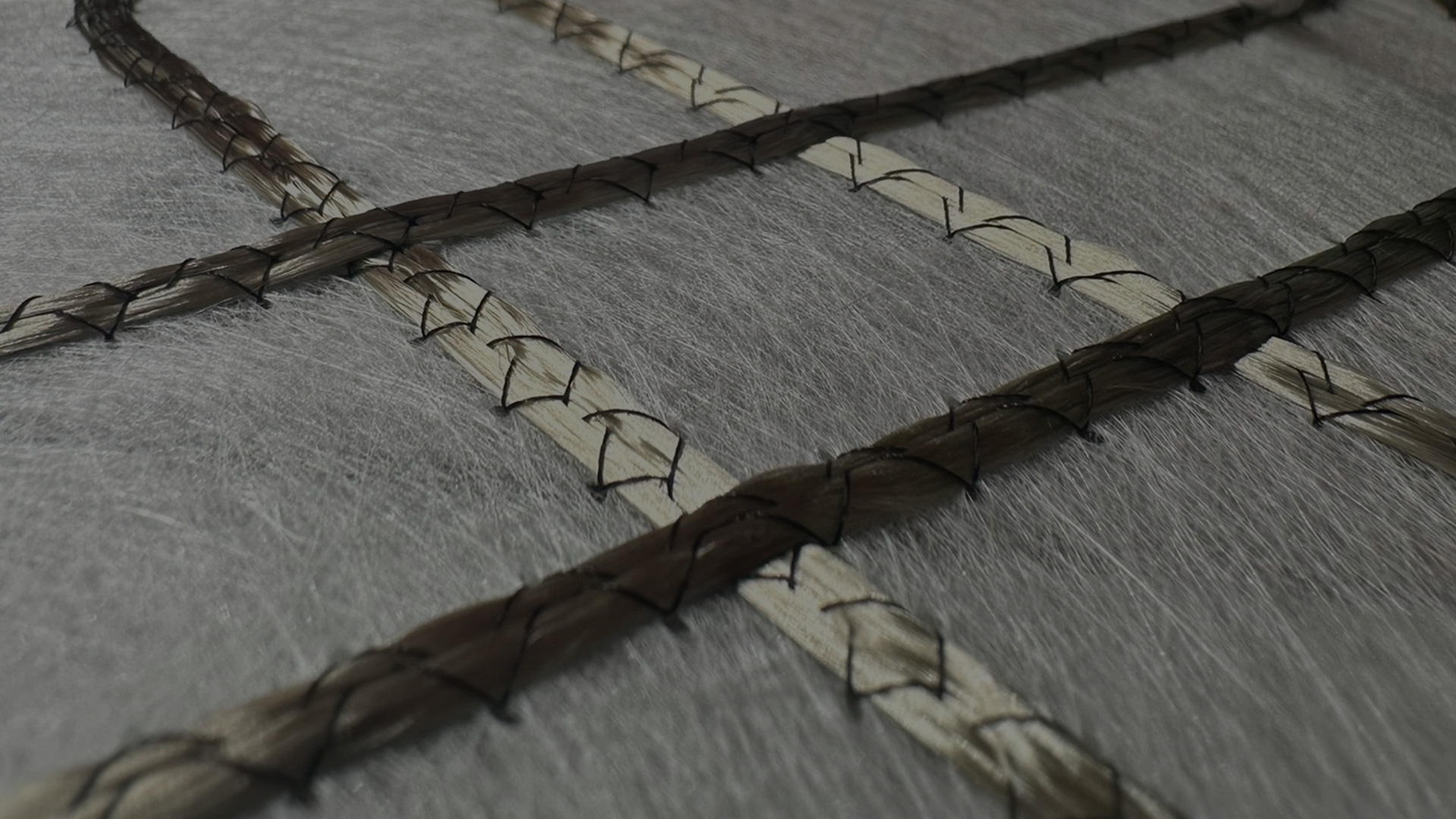
Using an innovative TFP process, we produce fiber preforms for thermoset processing.
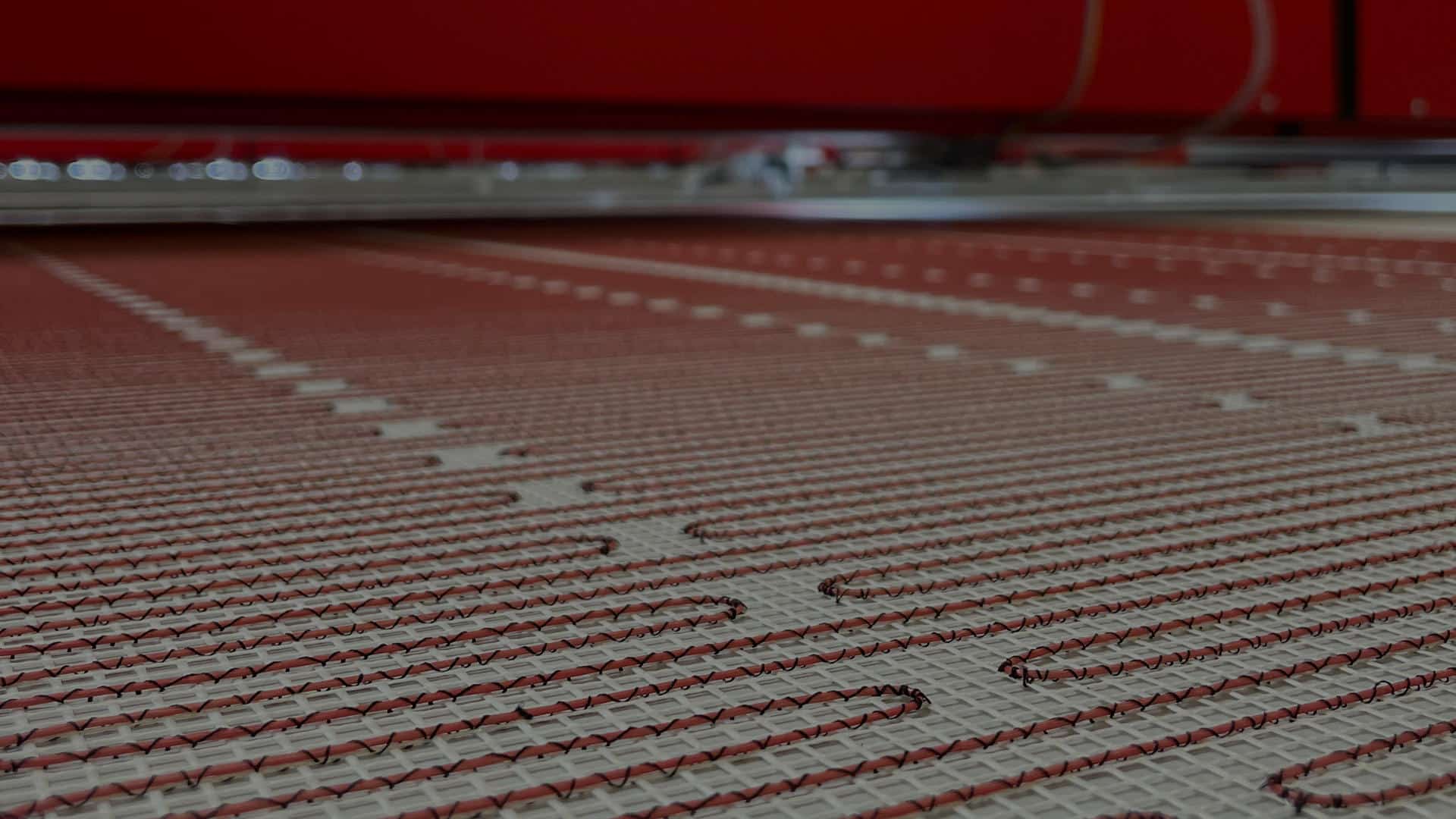
Integrate a heating function seamlessly and homogeneously into your fiber composite component or plastic product!

Seamlessly expand your fiber composite component with necessary or additional functions, such as damage sensing, measurement data acquisition, data transmission and much more!
You are currently viewing placeholder content from Facebook . To access the actual content, click the button below. Please note that this will involve sharing data with third parties.
More informationYou are currently viewing placeholder content from Instagram . To access the actual content, click the button below. Please note that this will involve sharing data with third parties.
More information