
TFP Technology GmbH

Seamlessly integrate innovative features into your product or component.

✓ As functional and sensor threads, optical fibers, LEDs, thin single wires or glass fibers

✓ with a layout perfectly tailored to your application

✓ on a material-homogeneous carrier material for your further processing.

Tailored Fiber Placement with Functional Integration
Textile sensors and integrated functions for your fiber preforms and sensor mats

Do you want to collect and use real-time data from your product or component to improve the health, performance, safety, comfort, and efficiency of your applications?

Textile sensors can be seamlessly integrated into fiber preforms and sensor mats.

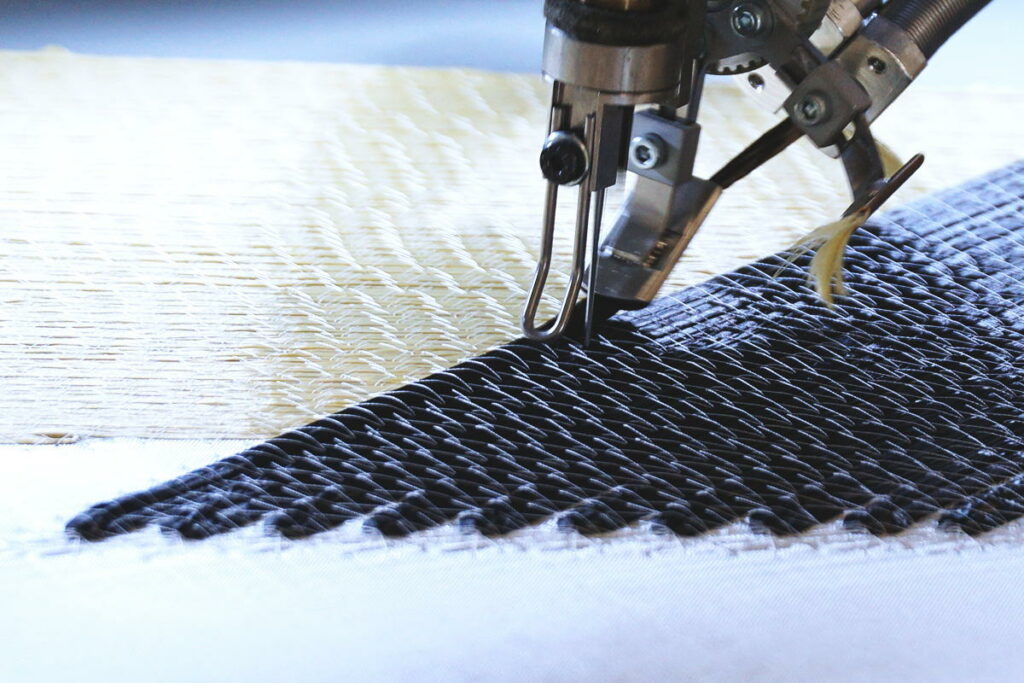
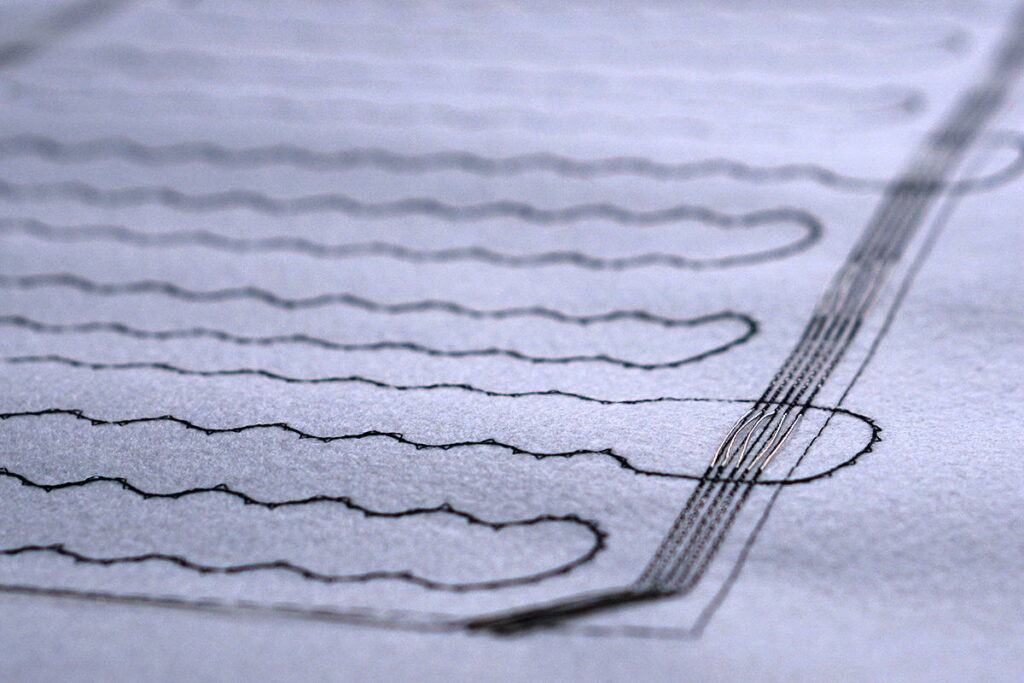
At TFP, we work with you to develop a custom-fit sensor mat in terms of shape, size, sensor layout, and data transmission method. We embroider the sensors and conductive traces onto a substrate that you can easily process further and that best meets the requirements of your application.

Capture environmental data, monitor processes, or improve the user experience to ensure the performance, efficiency, and safety of the products and processes in which your components are used.

Textile sensors and functional threads perfectly complement your product because they:

We process the finest strands down to 0,04 mm, coated threads, and other sensitive materials that are difficult or impossible to process using conventional manufacturing methods. When integrated into smart textiles, our washable textile sensor mats offer a high level of wearing comfort and impress with their textile feel.

Are you looking for a textile sensor integration solution for your component? Contact us, we'd be happy to advise you.

Integrate functions with sensor elements and functional threads or illuminated surfaces.

Together with you, we develop a sensor layout for fiber composite materials that meets all the requirements of your specific application and ensures that the sensors monitor all critical areas in the fiber composite where damage can occur.

The sensors integrated into the fiber composite mats detect changes in certain parameters, such as pressure, tension, temperature, humidity or other relevant physical or chemical quantities , which could indicate possible damage to the material.

Detect potential damage to fiber composite structures early, before it causes serious problems. Reduce maintenance costs while simultaneously increasing your customers' safety.

Integrate these and other functions using embroidered functional threads:

  • Damage detection (damage sensing, wire mesh)
  • Recording of load conditions (e.g. deflection of elements)
  • Transmission of information (data transfer) as well as
  • Construction of sensor arrays using flexible conductor tracks
  • Integration of light and light surfaces.

Benefit from the integration of functional threads or textile sensors into your fiber preforms.

Economically

Cost-efficient production of complex preforms

Complex structures

Complex patterns, layers, or arrangements of fibers in preforms for pinpoint reinforcement

Light & stable

Lightweight fibers and carrier materials, but high stiffness due to optimal fiber alignment

Hybrid

Individual combination of lightweight fibers (carbon, glass fiber, aramid, basalt, …) and metals

Multifunctional

Seamless integration of heating wires or sensor threads into fiber preforms

Reproducible

Manufacturing with high repeatability in small and large series.

Minimize the number of individual components and save work steps.

We manufacture complex preforms and sensor mats with customized functional integration, precisely tailored to your industrial application. Integrate our finished semi-finished products into your production in a single step . Save time by eliminating the need to place numerous components and reduce potential errors in your component or product manufacturing processes. Replace many work steps with a preform featuring integrated functions or a sensor mat.

Textile sensors and sensor mats for your industrial application

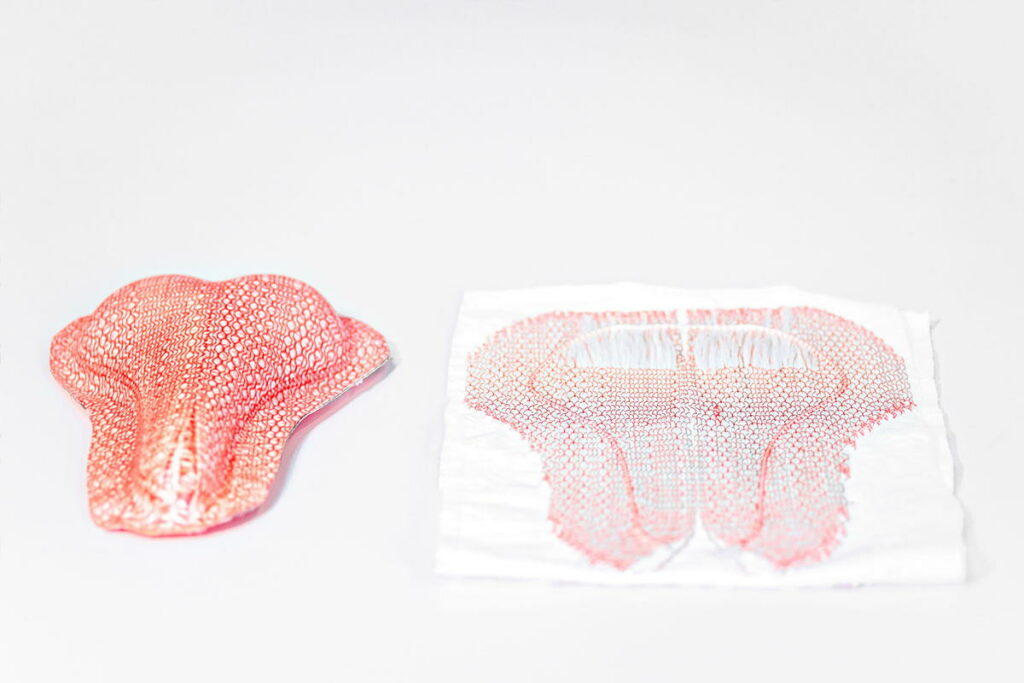
We embroider various sensors, such as pressure and strain sensors, onto a textile substrate. This creates material-homogeneous fiber preforms with integrated functions or semi-finished products for your sensor mats, which you can seamlessly embed into your product.

Damage Sensing: Textile sensors & sensor mats from the manufacturer TFP Technology

Detect damage early

Sensor mats: Damage Sensing

Together with you, we develop a sensor layout for fiber composite materials that meets all the requirements of your specific application and ensures that the sensors monitor all critical areas in the fiber composite where damage can occur.

The sensors integrated into the fiber composite mats detect changes in certain parameters, such as pressure, tension, temperature, humidity or other relevant physical or chemical quantities , which could indicate possible damage to the material.

Detect potential damage to fiber composite structures early, before it causes serious problems. Reduce maintenance costs while simultaneously increasing your customers' safety.

Sensor arrays and textile sensors from manufacturer TFP Technology

Capture data in real time

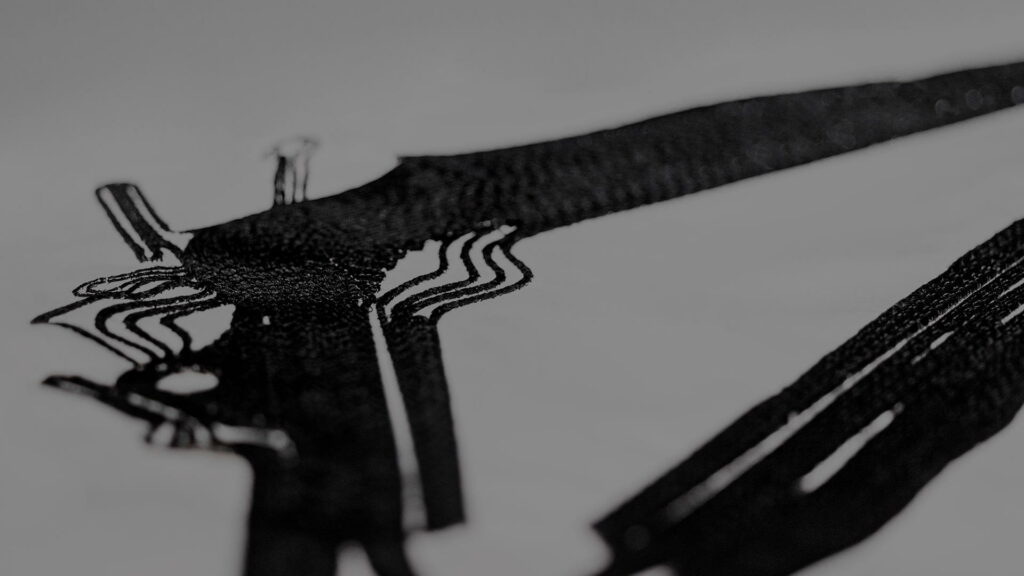
Sensor arrays with conductive traces

Sensor arrays with conductive traces offer precise monitoring and data transmission in various applications. These arrays consist of an arrangement of sensors mounted , for example, on fiber composites with integrated conductive traces . The data acquired in real time is output simultaneously by multiple sensors.

We integrate strands or wires for data acquisition using sensors directly into your fiber preforms.

Capture data from multiple sensors simultaneously and obtain comprehensive information to make data-driven, sound decisions.

Textile sensors and sensor mats from the manufacturer TFP Technology

Submit information

Highly flexible textile sensors

Our highly flexible sensors can be integrated into a wide variety of substrates to create smart textiles. These textile sensors can be used for applications such as pressure measurement, RFID identification, and as temperature-resistant NFC antennas.

The data collected by the sensors is transmitted in real time, e.g. via:

  • Cables
  • NFC
  • RFID or UHF RFID

The type of data transfer depends on your desired application.

Functional and sensor threads complement components and products in these and other applications.

Automotive & Motorsport

✓ Underbody
✓ Rims
✓ Rear wing
✓ Reinforcement structures for the body
✓ Components for your product

Aviation

✓ Window frames for aircraft
✓ Landing flaps
✓ Lifter
✓ Ribs in wings
✓ Components for your product

Sports & Freetime

✓ Sports equipment
✓ Inlays for snowboards
✓ Components for bicycles
✓ Protective equipment and helmets
✓ Components for your product

Medicine

✓ Orthoses
✓ Prostheses
✓ Components for X-ray systems or operating tables
✓ Components for your product

Innovative functions, sensor surfaces and illuminated surfaces from the manufacturer

  • You want to modify your fiber composite component necessary or additional functions expand?
  • Are you looking for a manufacturer who seamlessly integrates functional fibers for damage sensing, measurement data acquisition, data transmission and much more into your component as a sensor mat or fiber preform?


Get in touch with us! We look forward to your idea or challenge!

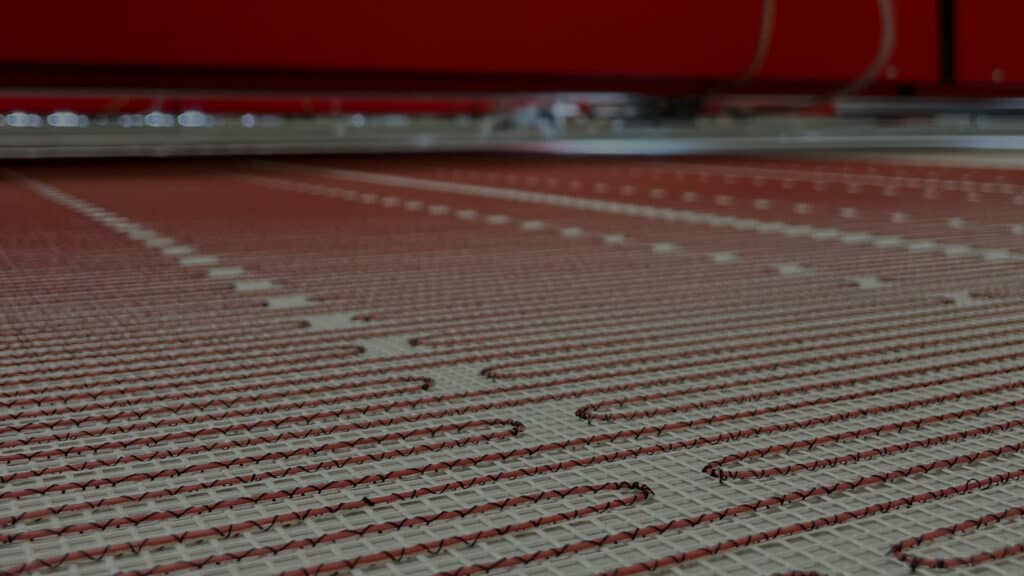
This is how your sensor mats are created.

Textile sensors can do even more.

They integrate seamlessly into fiber preforms.

Integrate necessary or additional functions, such as damage sensing, measurement data acquisition, data transmission, or light. seamless and material homogeneous in your Fiber preforms For precise reinforcement of your fiber composite component or plastic product!

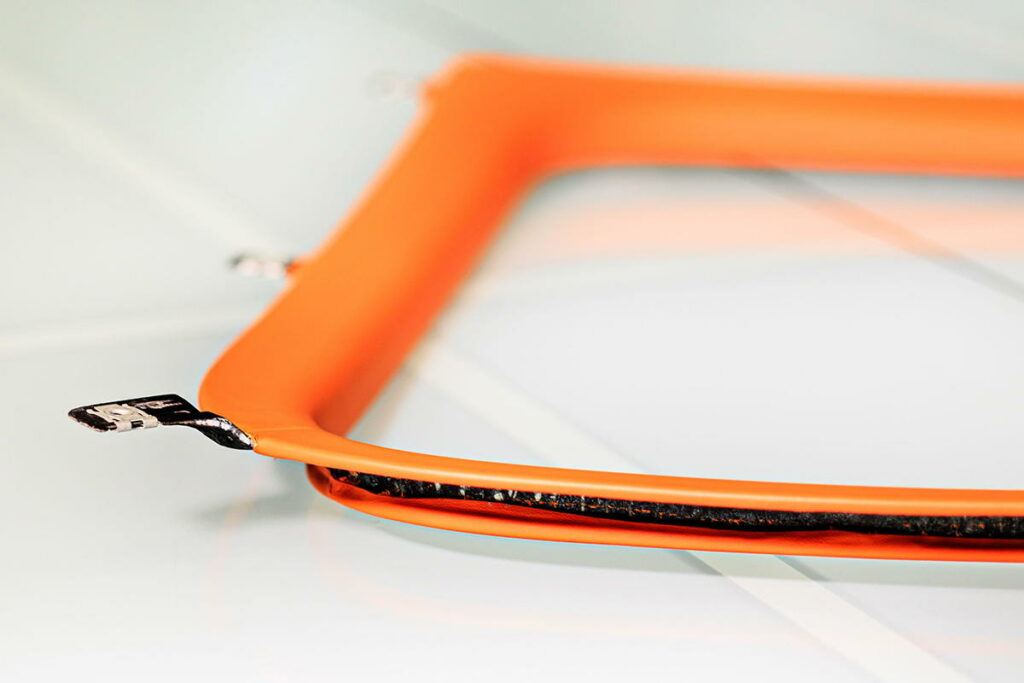
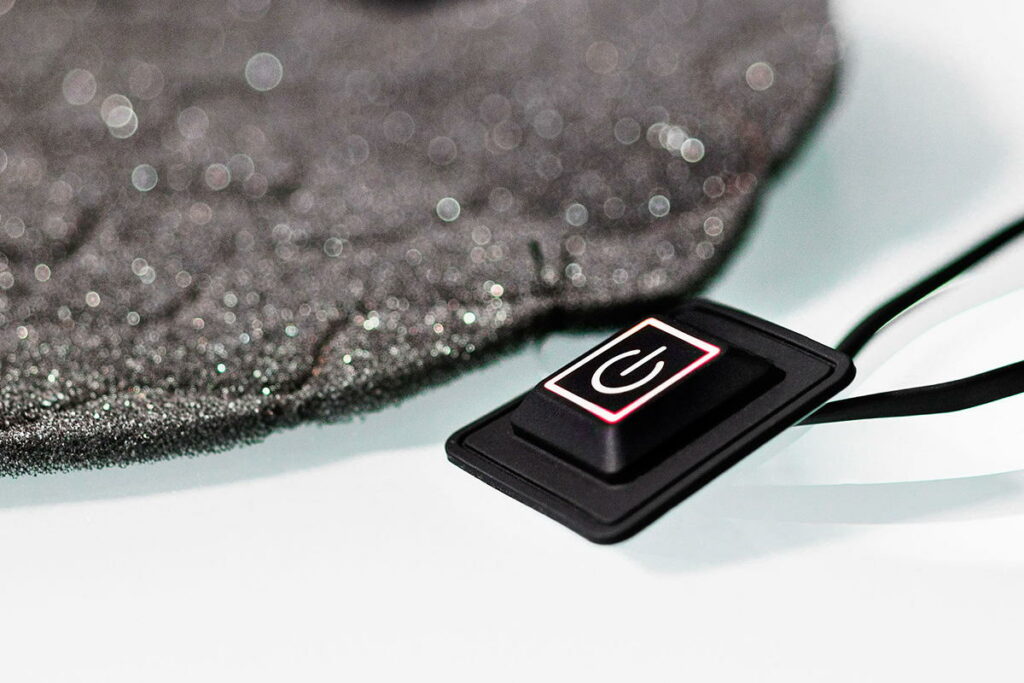
They also serve as heating elements

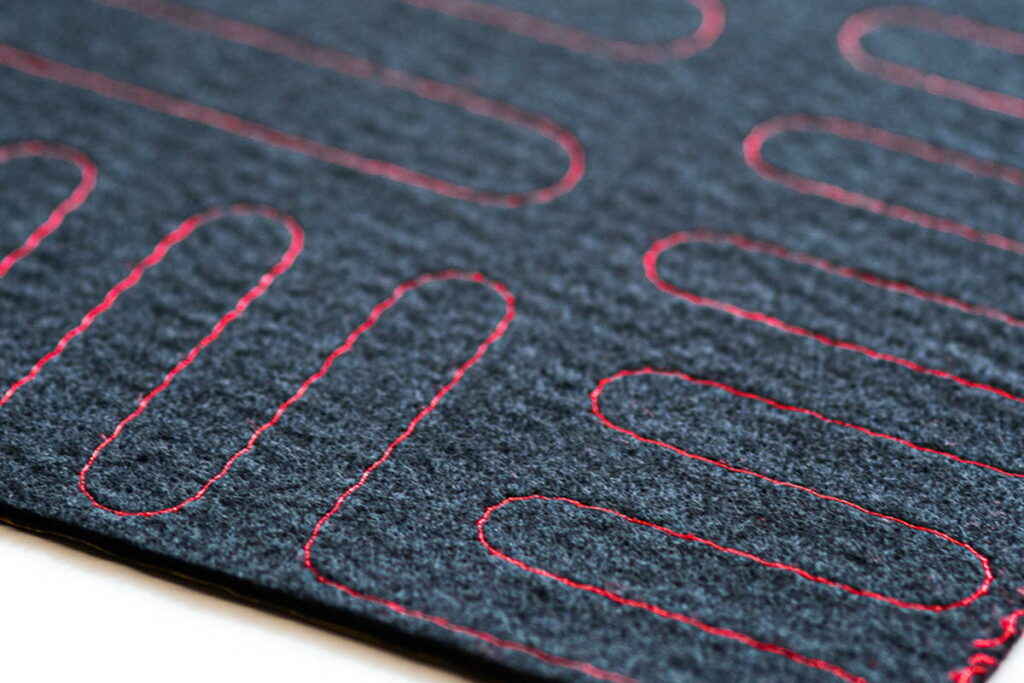
Integrate a heating function seamlessly and homogeneously into your fiber composite component or plastic product!

Questions and answers about textile sensors and sensor mats from TFP

Here you will find answers to frequently asked questions about textile sensors, functional threads, and sensor mats from TFP Technology . The FAQs will help you quickly assess whether an embroidered sensor mat is suitable for your component, your application (e.g., damage sensing, smart textiles, or contact and alarm mats), and your requirements for measurement parameters, data transmission, and series production quality. If you already have CAD data or a sketch of your component, we can also check the feasibility together.

What is a textile sensor mat and what is it used for?

A textile sensor mat consists of sensor and functional threads that are embroidered directly onto a flexible backing material using Tailored Fiber Placement (TFP) . It detects physical quantities such as pressure, strain, or temperature in real time and outputs the data for further analysis. It is used, among other things, for monitoring the condition of components, in smart textiles, or as a contact and alarm mat.

Damage sensing involves the targeted integration of sensor threads or a wire mesh into the critical areas of a fiber composite component where damage is most likely to occur. If parameters such as stress or strain change in these areas, the sensors register and report this deviation before structural damage develops. This allows maintenance intervals to be planned according to actual needs rather than being rigidly predetermined.

In addition to pressure and strain sensors, TFP also processes optical fibers, LEDs, ultra-fine strands down to 0,04 millimeters in diameter, as well as coated threads and glass fibers. These elements are laid together with the reinforcing fibers in a single step, so that the sensor and component structure form a single unit. The most suitable combination depends on the desired measurement parameter and the environment in which the component is used.

Depending on the application, data transmission occurs via wired or wireless connections using NFC, RFID, or UHF-RFID. The textile conductors carry the signals directly from the component, eliminating the need for additional external cabling. The choice of transmission method depends on the required range, environmental conditions, and your existing system architecture.

Sensor mats are particularly relevant for manufacturers of fiber composite structures, where undetected material defects could jeopardize the safety or lifespan of a component. For more specific applications, such as sensors in hospital beds or contact and alarm mats, TFP provides dedicated pages with industry-specific details, for example, on sensor mats for beds and couches , and on sensor mats for contact, alarm, and bell mats . This page focuses primarily on the fundamental operating principle of textile sensor integration itself.

The embroidered sensor and functional threads are robust, kink- and vibration-resistant, and maintenance-free, as they are homogeneously integrated into the carrier material instead of being glued on afterwards. In smart textiles, wash-resistant versions are also used, offering a high level of comfort and a textile-like feel. This makes the sensors suitable for stationary components as well as for moving or wearable applications.

The process begins with the collaborative development of a sensor layout and the selection of suitable fibers, functional threads, and substrate material. TFP then creates the CAD data and produces a prototype, which you can test in your own processing department. After optimization and approval, series production of the semi-finished products follows, in small or large batches.

Learn more about textile preforms

Sensor mat for bed & couch in medical applications from manufacturer TFP Technology

Sensor mats for beds and loungers

Sensor mats for manufacturers of beds and couches in the medical and care sector: individually designed textile sensors, precisely applied to suitable carrier materials and cost-effectively integrated into innovative medical products.

Read more ->

Damage sensing involves the targeted integration of sensor threads or a wire mesh into the critical areas of a fiber composite component where damage is most likely to occur. If parameters such as stress or strain change in these areas, the sensors register and report this deviation before structural damage develops. This allows maintenance intervals to be planned according to actual needs rather than being rigidly predetermined.